
Wholegrain Shortbread Flight
A flour study

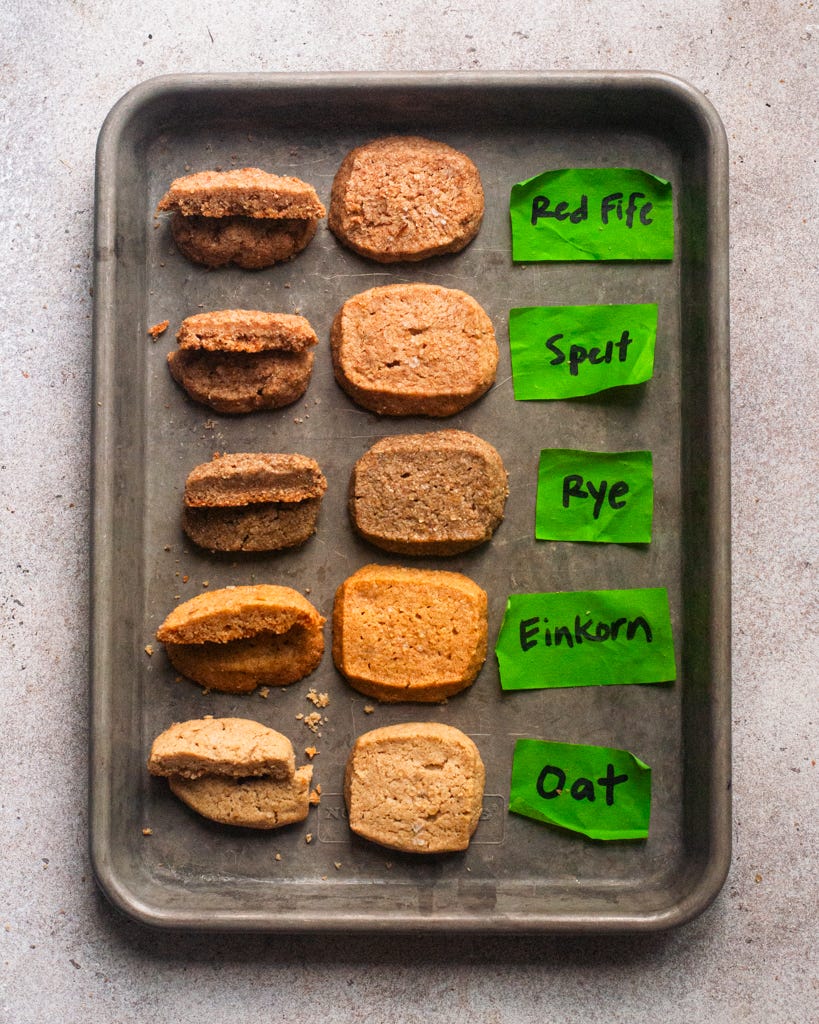
“You should do a whole grain tasting,” my husband mentioned casually one Sunday morning. “With those cookies…what are they called? The easy ones. You know, shortbread.”
A brilliant idea, really. Shortbread is the perfect cookie for highlighting a flour’s personality. There aren’t ingredients like eggs or additional liquid to dilute the flavor or change the texture. Plus, the sparse ingredient list and easy base ratio makes scaling for batch testing…dun dun dun…easy as pie or a piece of cake.
But let’s back up a second. Whole grains are integral to my baking. They make their way into a majority of my bakes, whether it’s Saturday morning pancakes, weekly sourdough, or a batch of cookies. The value goes beyond nutritional benefits. Baking with whole grains also opens a whole world of flavor and texture and offers a concrete way to support local grain farmers and agriculture.
My modus operandi is to substitute 25-50% of a recipe’s white flour (by weight) with wholegrain flour. Generally, I’ve found ~30% wholegrains to be the “sweet spot” where you can taste the difference but not have to make significant changes in the recipe. I admire bakers who consistently bake with 100% wholegrains — it’s an area where I want to improve, particularly in yeasted bakes.
But let’s start simple: 100% wholegrain shortbread.
The players


For this experiment, I made 100% wholegrain cookies using five different grains that I normally have on hand:
Red Fife: a heritage grain originally from Scotland, Red Fife is thought to be Canada’s oldest wheat. It is a hard red wheat.
Whole Spelt: an ancient grain, spelt is often prized for its sweet, nutty flavor and digestibility.
Whole Rye: the hardiest of cereal grains, rye tolerates very cold temperatures which makes it especially popular in harsher climates. It has a distinctive, rich flavor.
Einkorn: known as the original cultivated wheat. It contains more protein and anti-oxidants than modern wheat.
Oat: a cereal grass that is a different species from wheat. Unlike wheat, oats almost never have their bran and germ removed during processing, meaning that you are getting the “whole grain” when you consume oats.
The process


Grains: I freshly milled all the grains except oat on the finest setting in my Nutrimill Harvest grain mill, which is an electric countertop stone mill. (I do have oat groats, but find them challenging to grind at home — they tend to clog my mill at a fine setting, so I usually have to grind them on a coarser setting, then re-grind on a finer setting and then sift. So I usually buy oat flour in small batches.) All flour was unsifted.
Other ingredients: I used regular Canadian butter (80-82% butterfat) and plain granulated sugar, plus a little salt and vanilla. Before baking, I sprinkled each cookie with a little flaky salt and coarse sugar.
Mixing: I creamed all the butter, sugar, salt, and vanilla together, then divided this mixture into five equal portions. Each portion got 100g of a separate wholegrain flour. I formed each batch into a rectangular-ish log, then wrapped and refrigerated overnight.
Baking: The next day, each batch was sliced into 10 cookies and baked at 325F until lightly golden. The cookies were cooled completely before tasting.
Observations and Tasting Notes
Overall impressions: There honestly weren’t any bad cookies — I’d happily eat them all again, though my personal favorites were einkorn and Red Fife. I thought these two had the best balance of distinctive, pleasant flavors while also being texturally satisfying. They all stored well, and a couple in particular I thought tasted better on the second and third day.
While a couple doughs were noticeably more difficult to handle (more dry/crumbly compared to a white flour dough), in the end they all baked up fairly normally — nothing fell apart during slicing or baking. This gives me high confidence to go 100% wholegrain in things like cookie crusts and streusel, where structure is even less of an issue.
Freshly milled flour made a noticeable difference, even to my kids. The older ones immediately pegged the one flour that was store-bought (even though I bought it a day or two before from a place with high turnover). Wholegrain flour is very similar to coffee: once you’ve tasted a cup made with freshly ground beans, it’s hard to accept anything else. The flavor is much more lively and nuanced. To find fresh-milled flour in your area, ask your local artisan bakery or see if there are any local flour mills — this list is a great start. Keep in mind that wholegrain flour can spoil quickly due to the natural oils in the bran and germ, so buy in small batches and store airtight in the freezer if you aren’t using it quickly.
All in all, I had a blast with this! I have many more grains to try — khorasan/kamut, white wheat, emmer, and barley to name a few — so a round two feels inevitable. Let me know if there are any I should add to my list!
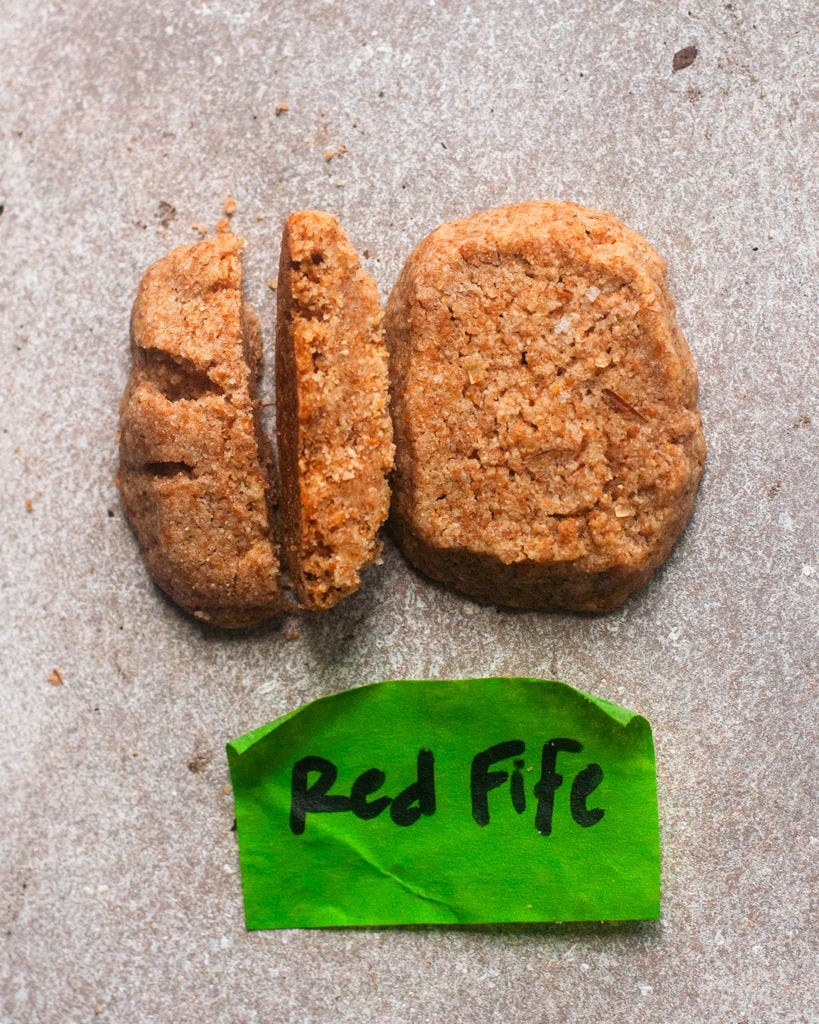
Red Fife
Dough (raw): More crumbly compared to dough made with all-purpose flour.
Texture: Toothsome with small bran particles
Flavor: Wheaty, nutty, and buttery.
Notes: One of my kids’ favorites.
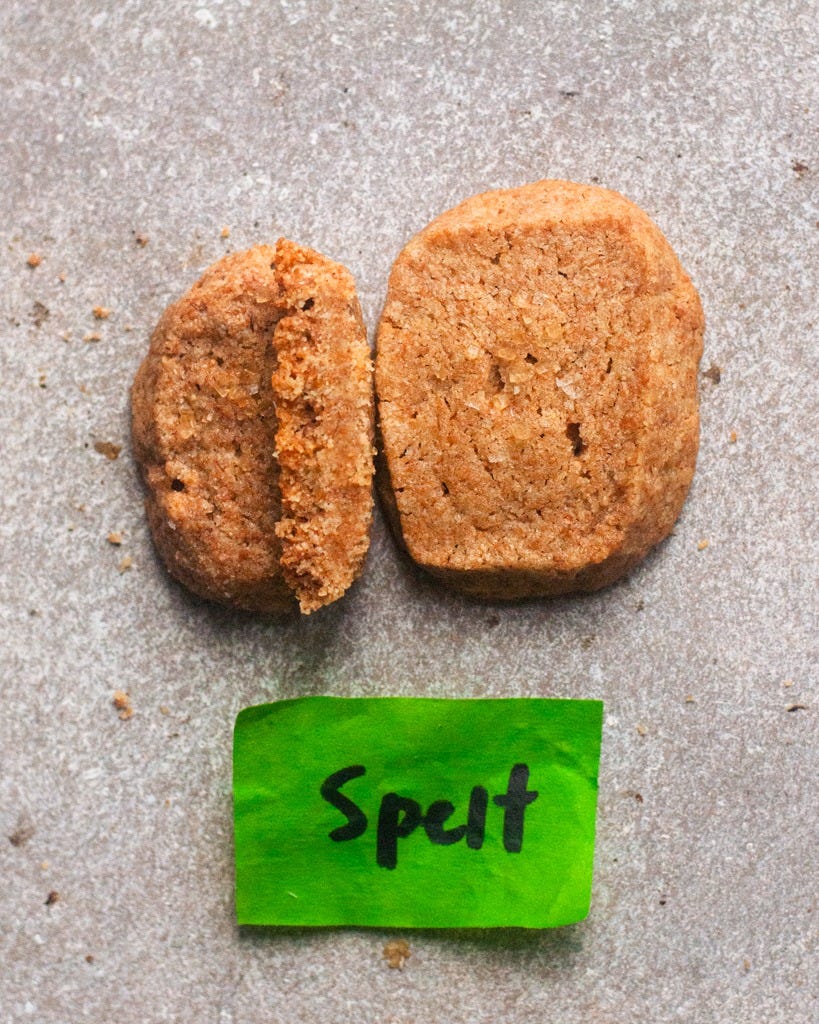
Spelt
Dough (raw): Easy to mix and form.
Texture: Classic “short” shortbread texture, very pleasant
Flavor: Fairly neutral and straighforward, a little malty, good everyday cookie. I thought this one was not very interesting the first day, but found myself going back to it on subsequent days — improved with age.
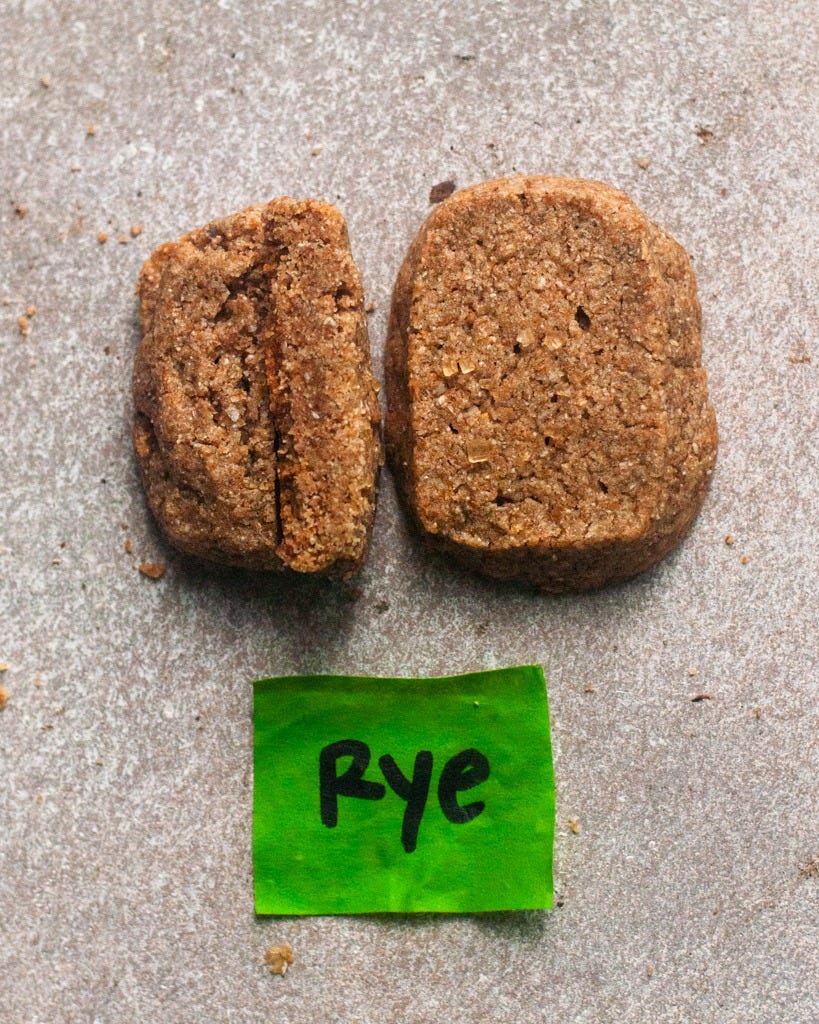
Rye
Dough (raw): Crumbly, hardest to form and slice
Texture: Most solid of this round; slight tackiness/gumminess
Flavor: Sweet and toasty, definitely the most complex and unusual.
Other: Least amount of spread during baking.
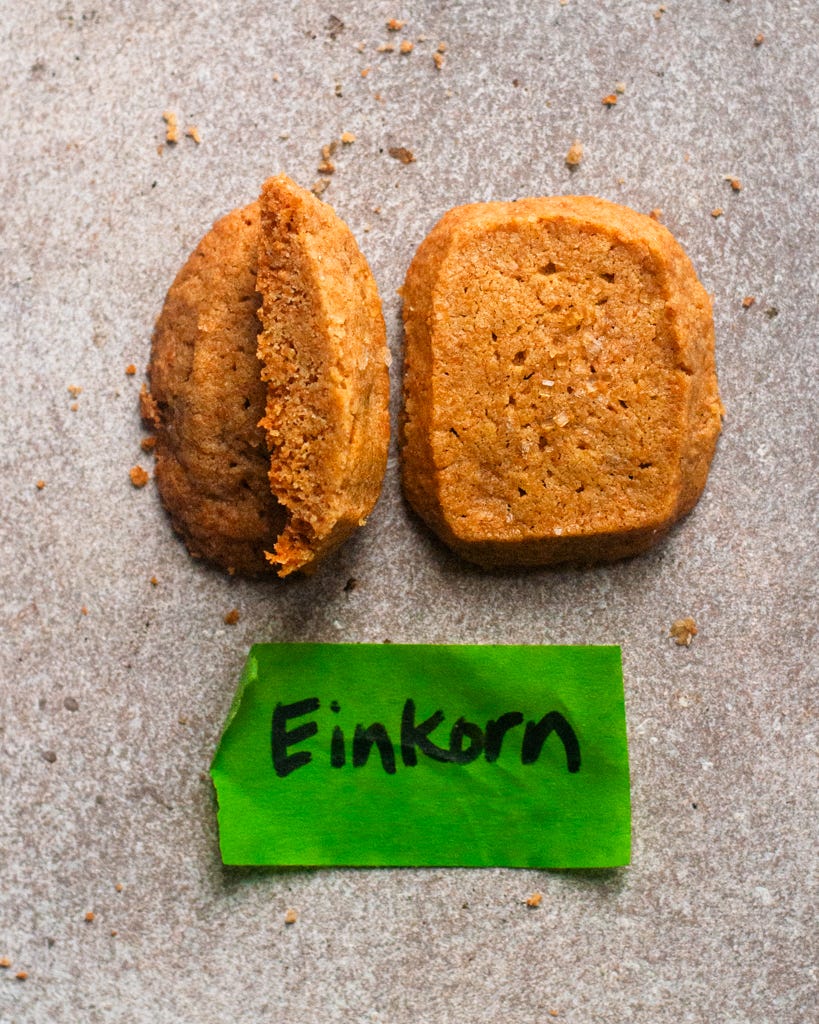
Einkorn
Dough (raw): Easy to mix/slice
Texture: Crispest of this round (could be due to spread), smooth crumb
Flavor: Nutty, most buttery tasting, smooth bite. Easy to eat.
Other: Most amount of spread during baking — might benefit from freezing before baking? Lovely golden hue. My personal favorite. Kids really liked this one too.
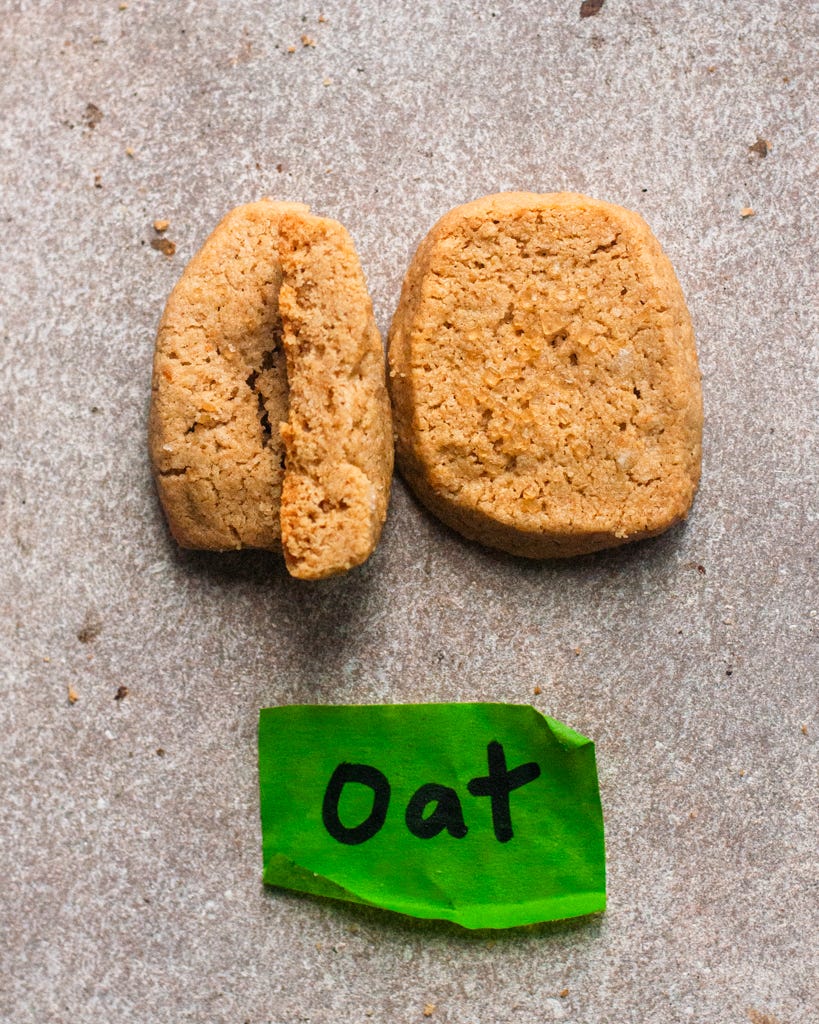
Oat
Dough (raw): Easiest of this round to mix and slice
Texture: Smooth/creamy
Flavor: Grassy with a slight bitterness.
Other: When tasted alongside others, could tell flour was not freshly milled. This one also improved with age — I think it tasted better the second day.
Annual subscription summer special!
Today’s recipe is available as a bonus for paid subscribers. If you enjoy my work and are able, would you consider upgrading to a paid subscription? This publication is entirely reader-funded and would not be possible without your support. Paid subscribers have access all 100+ recipes in the archive. For now through July 15th, please enjoy 20% off new annual subscriptions. Thank you for being here!
Wholegrain shortbread (one batch)
Makes 10 cookies (notes for scaling at bottom)
